
Summer before senior year is supposed to be your time to chill, hanging out with friends, maybe a part-time job, or diving into a hobby. But ask anyone who's already been through the college application grind, and they'll tell you the exact same thing: get your college essay done before school starts. Because once September rolls around, your schedule gets crazy. Between tough classes, sports, clubs, and a mountain of homework, there's barely any time left to sit down and actually think about a deep, meaningful story about yourself and even less time to write it well.
Writing your personal statement over the summer gives you room to breathe. You can clear your head, take a messy first shot at it, and fix it up without the constant stress of deadlines piling on top of everything else. So, here's a simple, low-stress guide to getting your essay wrapped up before day one of senior year.
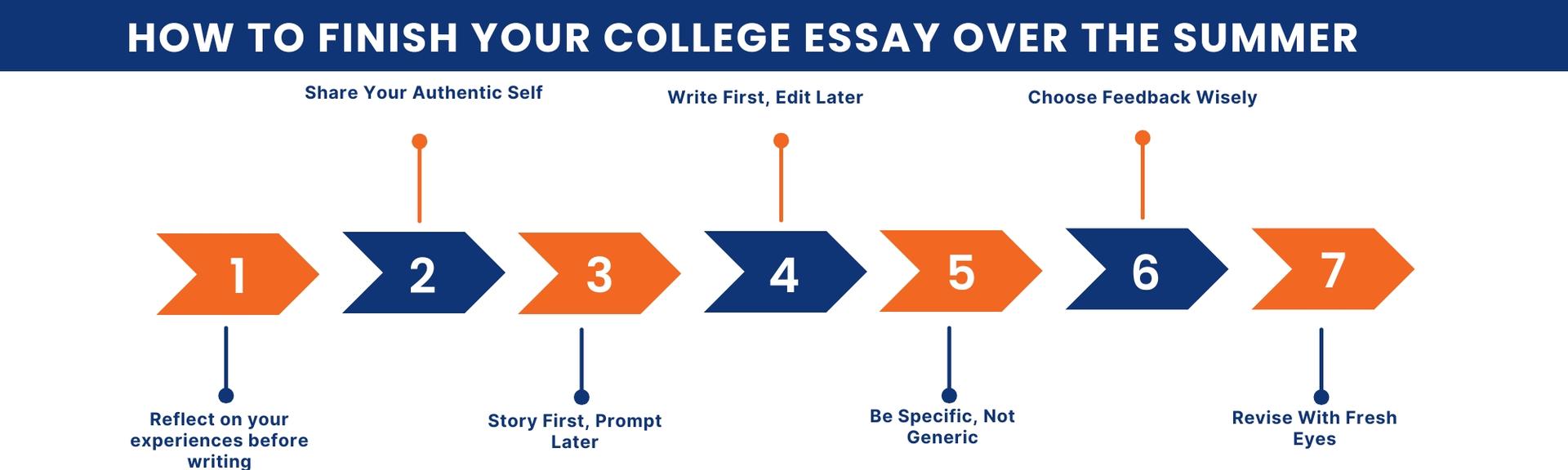
1. Start with self-reflection:
The biggest mistake students make is opening a document and trying to write immediately. Before you write a single sentence, spend time thinking through questions like:
- What moment has changed how you see yourself or the world?
- What do you do when no one's watching or grading you?
- What challenges did you face, and what did it reveal about you?
- What do your friends or family always come to you for?
Jot down rough answers, even messy ones. You're not writing yet; you're mining material. The best essay topics are rarely the most impressive-sounding achievements; they're the small, specific moments that reveal character.
2. Understand what admissions officers are actually looking for:
Your essay isn't a highlight reel. Admissions readers already have your transcript, activities list, and test scores; they know what you've done. The essay's job is to show who you are: how you think, what you value, and how you've grown. A quieter story told with genuine insight almost always beats a "big" story told generically.
3. Pick the prompt last, not first:
Instead of staring at the Common App prompts and trying to force a story into one, do it backward:
- Identify 2-3 strong personal stories or themes from your brainstorming.
- Draft loosely around the one that feels most authentic.
- Match it to the prompt afterward; most personal stories fit several prompts, including the open-ended "Topic of your choice" option.
4. Write a rough draft:
A messy 650-word draft is infinitely easier to work with than a blank page. Your first attempt doesn't need to be good; it just needs to exist. Get your ideas down. Here's the thing most students don't realize editing is where real writing actually happens. Nobody writes a great essay on the first try. Colleges aren't reading your first draft; they're reading your fifth or sixth, after you've cut off the fluff and sharpened the details. So, push past the discomfort of writing something imperfect. Get it on the page first and worry about making it good later.
5. Revise for specificity, not just grammar:
Once you have a draft, read it and ask:
- Could this sentence apply to literally any other applicant? If yes, cut or sharpen it.
- Are you telling the reader you're resilient/curious/hardworking, or showing it through a scene?
- Does the essay have a clear turning point or realization, not just a list of events?
Specific, sensory detail (a particular conversation, object, or moment) does more work than broad claims about your character.
6. Get feedback:
Ask one or two people; a teacher, an older sibling, or a mentor to read your draft with two questions in mind: Does this sound like me? And what's the one thing you remember after reading it? Avoid getting too many opinions at once; too many edits from too many people can flatten your voice into something generic.
7. Let it rest, then read it again:
You have a solid draft. Now step away from it. Seriously, close the tab, walk away, and don't look at it for a few days. When you come back, you'll be amazed at what you notice. A final pass with fresh eyes isn't just proofreading. It's where good essays become great ones.
Why Doing This Now Matters
Finishing your essay before senior year starts means:
- You walk into the school year with one major task off your plate.
- You have time to revise supplemental essays for individual schools without rushing.
- You're not writing your most personal piece of writing at 11 p.m. between homework and deadlines.
A rushed essay reads like a rushed essay. A summer draft, revised calmly over a few weeks, reads like you.
Your essay is ready. Now what?
Getting your college essay done before senior year starts is one of the smartest moves you can make. It buys you time, reduces stress, and gives you the mental space to actually do it well, instead of squeezing it between homework, tests, and everything else senior year throws at you.
You've worked hard on your story. Now make sure the schools on your list make financial sense too. Because once you know where you want to apply, the next question every family asks is the same: can we actually afford it?
That's where Top5Colleges comes in. It shows you what college will actually cost you; not just the sticker price, but your real out-of-pocket cost after scholarships and financial aid, based on your specific profile. Compare your top choices side by side and find the school that fits you academically, personally, and financially.
Because finding the right college isn't just about where you get in. It's about where you can truly thrive, without the financial stress hanging over you.
You have an essay. Now find the school that's worth writing for.
Ready to find your financial fit?
Compare scholarships from 1,600+ colleges in minutes.
Try Top5 Colleges Free